Small business & ecommerce
Ecommerce Website Development in India for Small Product Brands
What should a small Indian product brand actually build—and when is a practical Shopify store more sensible than custom ecommerce development?
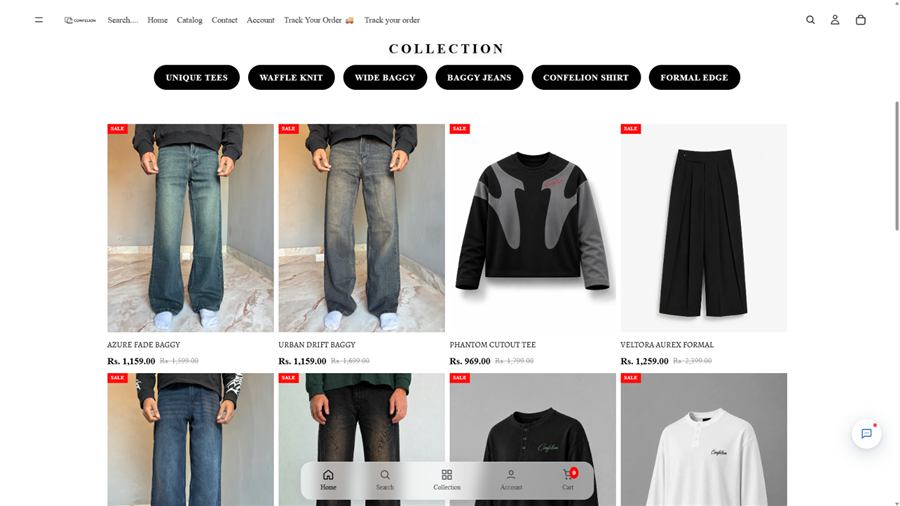
For a small product brand, ecommerce website development usually means organising products into a store that customers can understand and use. The essential pieces are a homepage, collections, product pages, navigation, checkout, payments, shipping settings, policies, trust information, and a mobile path to contact or WhatsApp.
It does not automatically mean engineering a marketplace, custom backend, mobile app, or enterprise system. Many businesses search for a developer when what they really need is a platform chosen well and configured with care.
Who this route is designed for
Readyflow’s lane is deliberately narrower than a full-service enterprise ecommerce agency. It is intended for Instagram sellers, clothing and jewellery brands, accessories and perfume businesses, boutiques, handmade sellers, and small offline shops moving a repeatable catalogue online.
- Products, prices, and categories are becoming stable.
- Customers currently browse through posts, highlights, DMs, or WhatsApp.
- The brand needs a proper mobile catalogue and checkout path.
- The business does not require a marketplace or custom operational software.
A small brand does not need enterprise architecture to stop selling through scattered screenshots and messages.
What each part of the website is supposed to do
Homepage
Explain what the brand sells, introduce the strongest collections, and give a mobile visitor an obvious route into the catalogue. It should not make the buyer decode an art project before seeing a product.
Collections and product pages
Collections reduce the mental size of a catalogue. Product pages then answer price, variant, sizing, material, availability, and delivery questions. Shopify documents these catalogue foundations in its official product guidance.
Checkout, shipping, and policies
Checkout should feel dependable. Shipping areas, rates, return expectations, privacy, and terms should be understandable before purchase. Shopify’s shipping setup guidance explains how delivery settings affect what customers see at checkout.
Platform decision
Shopify, WooCommerce, or custom ecommerce?
This is not a full comparison article. It is a short filter for deciding how much technology the business needs to own and maintain.
Shopify-based ecommerce setup
Usually the best fit for small product brands, quick launches, standard catalogues, clean checkout, and owners who do not want to manage hosting and plugins. Shopify’s official ecommerce builder overview describes its hosted store tools, products, payments, and security.
WooCommerce and WordPress
More suitable for content-heavy businesses, teams that want the WordPress ecosystem, and owners comfortable with hosting, plugins, updates, and technical control. WooCommerce describes itself as an open-source platform where the owner chooses the host and feature stack; see its official overview.
Custom ecommerce development
Appropriate when the business has unusual workflows, marketplace logic, deep integrations, advanced B2B rules, or multiple operational systems. This is a different engineering project—not Readyflow’s ₹14,999 service lane.
What Readyflow builds for product brands
Readyflow builds a focused, mobile-first Shopify store around the brand’s current catalogue. The present Instagram Brand Shopify Launch starts at ₹14,999 for setup work.
Included
- Homepage shaped around products and collections
- Collection and category setup
- Product-page structure and catalogue setup within scope
- Basic policy, contact, and trust sections
- Payment gateway and checkout setup guidance
- Shipping settings and delivery-flow guidance
- Mobile-first navigation and product browsing
- WhatsApp or contact CTA
- Launch review and basic on-page SEO
Not included
- Custom marketplace or multi-vendor development
- Custom backend or enterprise architecture
- Mobile app development
- ERP, CRM, warehouse, or complex accounting integrations
- Advanced custom Shopify apps
- Advertising, photography, or content production unless agreed
- Shopify subscription, domain, paid themes, or paid apps
- Gateway processing and courier charges
When the current bonus is active, confirming within the 48-hour window can include up to five simple brand-specific Shopify sections at no extra setup fee. That is a scoped launch bonus, not unlimited custom development.
The focused service route is explained in more detail in Shopify store setup for Instagram brands.
What ecommerce website cost actually includes
Readyflow’s ₹14,999 is the service fee, not the lifetime cost of operating the store. The wider budget includes the Shopify subscription, a domain, optional themes or apps, payment processing, shipping charges, photography or content, and any work beyond the agreed scope.
Shopify’s prices change, so use the official Shopify pricing page before purchasing a plan. For a detailed budget model, read the Shopify setup cost breakdown.

Why mobile and WhatsApp belong in the same buying flow
Instagram, WhatsApp, and ad traffic commonly opens the store on a phone. Product cards must be readable, navigation must be simple, calls to action must be thumb-friendly, and trust information should appear before checkout.
The website does not need to replace WhatsApp. For many Indian product brands, the practical route is Instagram or content → store browsing → checkout or WhatsApp questions. Buyers can ask about size, delivery, customisation, or availability before ordering.
WhatsApp’s official click-to-chat guidance confirms that a link can open a conversation without requiring the customer to save the number first.
Process and timeline
- Share the brand, catalogue, and current sales flow.
- Readyflow reviews whether the focused Shopify scope fits.
- Provide photos, products, prices, policies, and access.
- The homepage, catalogue, product flow, and settings are built.
- Review the store on mobile and desktop.
- Launch after approval.
A focused store typically launches in 3–5 days after content and access are ready. Missing photos, changing prices, incomplete variants, or unclear policies are the most common reasons the timeline moves.
Relevant work
Product-brand storefront examples
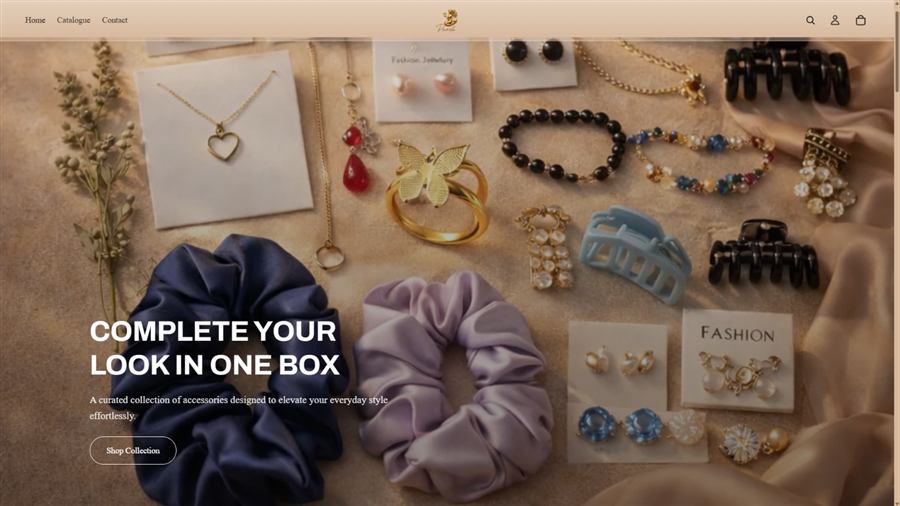
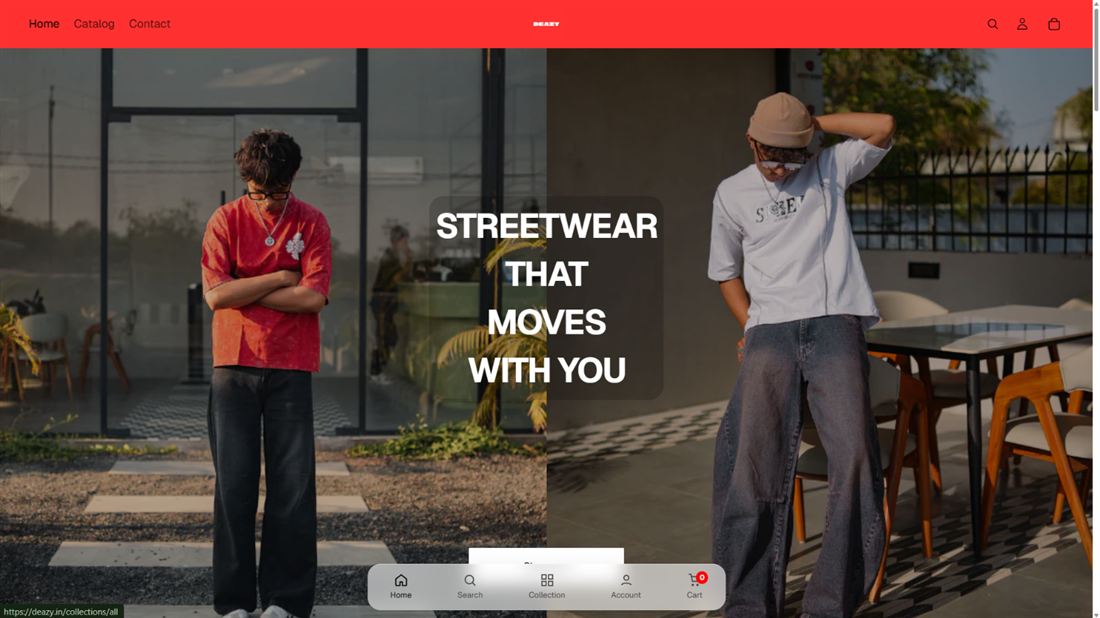
The examples below show clothing, jewellery, and printed product use cases from the existing Readyflow portfolio. They are presented as design and catalogue examples—not as claims about revenue or conversion uplift.

Frequently asked questions
Choosing the practical ecommerce route
How much does ecommerce website development cost in India?+
It depends on the platform, catalogue, design depth, content readiness, apps, and integrations. Readyflow’s focused Shopify launch setup is ₹14,999, with platform and third-party costs separate.
What is included in ecommerce website development?+
For a small product brand, it usually includes the homepage, collections, product pages, navigation, checkout setup, payment and shipping settings, policy pages, contact options, and mobile usability.
Is Shopify good for ecommerce websites?+
Yes, for many small product brands. It provides hosted infrastructure, checkout, catalogue tools, themes, and store management without requiring a custom backend.
Should I choose Shopify or custom development?+
Choose Shopify for a standard product, collection, checkout, and shipping flow. Consider custom development only when unusual workflows or integrations genuinely require it.
How long does an ecommerce website take to build?+
Readyflow’s focused Shopify setup typically takes 3–5 days after products, photos, prices, policies, and access are ready.
Can Readyflow build a store for Instagram sellers?+
Yes. The core offer is designed for product brands moving from Instagram, WhatsApp, DMs, or offline selling into a cleaner catalogue and checkout flow.
Are domain and hosting included?+
The domain is separate. Shopify plans include hosted platform infrastructure and SSL, while the Shopify subscription is also paid separately.
Can payment and shipping be set up?+
Readyflow can guide and configure the basic store-side setup. Provider processing, courier accounts, and per-shipment charges stay separate.
Do I need product photos before starting?+
Ideally, yes. Product photos, names, prices, variants, and categories are the main inputs for a useful store.
Can I use WhatsApp with my ecommerce website?+
Yes. WhatsApp can remain in the journey for sizing, delivery, customisation, and pre-purchase questions.
Is this suitable for clothing or jewellery brands?+
Yes. Visual product brands benefit from clear collections, strong imagery, variants, trust information, and a simple mobile route from social content to products.
When is custom ecommerce development actually needed?+
Usually for marketplace logic, deep integrations, complex inventory or pricing workflows, advanced B2B rules, or multiple connected operational systems.
A practical recommendation
Not sure whether you need Shopify setup or custom development?
Share your brand details. Readyflow will suggest the simpler route when it fits—and say so when the project needs a different specialist.