Ecommerce Platform Guide
Shopify vs WooCommerce in India
An India-specific decision guide for product brands choosing between a faster hosted store and a more configurable WordPress commerce stack.
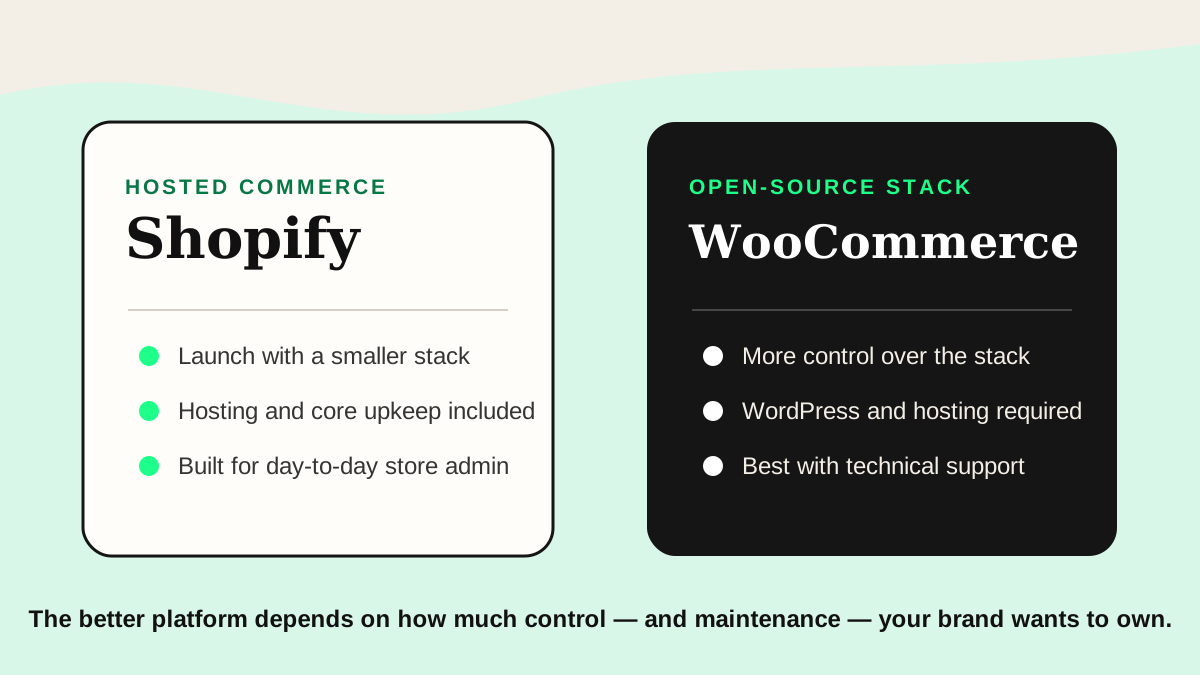
Many Indian sellers start with Instagram DMs, WhatsApp, Facebook, a marketplace, or an offline counter. When orders become harder to track, a proper store starts to feel necessary. Then comes the platform question: Shopify or WooCommerce? Both are valid. The better choice depends on your business model, technical comfort, budget, and how quickly you need a dependable first launch.
This guide is for small product brands, boutique owners, clothing and jewellery sellers, perfume and accessory brands, handmade businesses, and early D2C founders. It is not a platform war. WooCommerce gives more control and can be excellent when a business already uses WordPress or has developer support. Shopify is usually simpler when the job is to get a mobile-first product store live without taking on hosting, plugin, and security management.
Choose Shopify if you want a faster, lower-maintenance store launch. Choose WooCommerce if you already use WordPress, have developer support, or need deeper control. For most small product brands moving beyond DMs, Shopify is the simpler starting point.
Shopify vs WooCommerce: comparison snapshot
Use this as a decision filter, not a scorecard. A WooCommerce advantage in control becomes a burden if no one on the team wants to maintain it; Shopify’s convenience can be a poor trade if your business genuinely needs a custom WordPress-led system.
| Area | Shopify | WooCommerce |
|---|---|---|
| Setup speed | Usually quicker: store, hosting, SSL, and checkout start in one place. | More steps: WordPress, hosting, theme, plugins, and checks need to work together. |
| Upfront cost | A recurring platform plan starts early; setup work is separate. | WooCommerce core is free, but a live store still needs hosting and a domain. |
| Recurring cost | More predictable, but account for apps, gateway charges, and India-specific third-party transaction fees. | Can be lean, but hosting, extensions, backups, and developer help can add up. |
| Hosting and security | Hosted platform; core infrastructure is handled by Shopify. | You choose and manage the hosting environment, updates, and wider WordPress stack. |
| Payments and COD | Indian stores generally use a third-party gateway; COD can be configured as a manual payment method. | Gateway choice is broad; COD is available in core, with setup varying by payment and shipping stack. |
| Shipping | Works well with apps and courier aggregators; check each app and plan for advanced rules. | Core zones are flexible; advanced rules often mean extensions or custom configuration. |
| SEO basics | Strong built-in foundations for product stores. | Very strong potential, especially for content-led WordPress sites, with more configuration control. |
| Customization | Good for standard commerce flows and theme-level work. | Deeper code and data control when a capable developer owns the stack. |
| Maintenance | Lower technical upkeep for the merchant. | Higher ownership: plugin, theme, WordPress, hosting, backup, and security hygiene. |
| Admin ease | Usually simpler for a founder handling products and orders day to day. | Capable, but the experience depends on the theme, plugins, host, and setup quality. |
| Developer dependency | Helpful for custom work, not essential for normal daily operations. | Often valuable for setup, updates, fixes, and uncommon requirements. |
| Best fit | Small product brands that value a fast, lower-maintenance launch. | WordPress-led, content-heavy, or technically supported brands needing deeper control. |
The table deliberately scrolls on smaller screens. Comparison information is easier to check in aligned columns than in decorative cards.
How Shopify and WooCommerce work
Shopify is a hosted ecommerce platform. The merchant creates an account, selects a plan, chooses a theme, adds products, connects payment and shipping tools, and manages orders through Shopify’s admin. Hosting and the core commerce platform are part of the service.
WooCommerce is an ecommerce plugin for WordPress. It can be a very powerful store foundation, but it lives inside a wider WordPress environment. That means hosting, WordPress updates, PHP compatibility, themes, plugins, backups, and security decisions are more closely connected to the merchant’s own stack. WooCommerce documents those environment requirements for a reason.
The key difference is not “capable versus incapable.” It is “hosted convenience versus self-managed control.”
Cost comparison in India: look beyond the first price
This is where a lot of bad advice begins. WooCommerce core is free, but no operating store is free. Shopify has a visible subscription, but the subscription bundles parts of the stack that WooCommerce owners arrange separately. Prices, offers, and provider rules change, so treat the official pages as the final check before purchase rather than relying on an old comparison article.
Shopify cost model
Pay for simplicity, then keep the stack lean
- Recurring Shopify plan and domain renewal
- Free theme or an optional paid theme
- Apps only where a real feature gap exists
- Payment-gateway processing charges
- Applicable Shopify third-party transaction fees in India
- One-time setup or developer cost, if you hire help
WooCommerce cost model
Start lower, but price the whole operating stack
- Hosting, domain, and HTTPS setup
- Free or paid theme
- Plugins and extensions for real needs
- Backups, security, and performance tooling
- Payment and shipping integrations
- Setup, maintenance, and developer time where needed
Shopify costs for Indian merchants
Start with the current Shopify India pricing page, not an agency screenshot. The plan, domain, optional theme, apps, gateway charges, and setup cost are separate decisions. The important India-specific detail is that Shopify Payments is not available for India-based businesses in Shopify’s supported-country documentation. Most Indian merchants therefore use a third-party gateway and should include both the gateway’s processing costs and Shopify’s applicable third-party transaction fees in their model.
That does not make Shopify impractical in India. It means the economics should be honest. Shopify can still be lower-friction in time, coordination, hosting, and maintenance for a founder who wants to focus on products and orders. For a deeper scope breakdown, see our guide to Shopify store setup cost in India.
WooCommerce costs for Indian merchants
WooCommerce’s free core plugin is a real advantage when a business already has good WordPress hosting, a working site, and someone capable of maintaining it. But store owners should budget for a domain, hosting renewal or upgrades, SSL/HTTPS, theme choices, extensions, backups, security, performance work, and technical help when something conflicts. Its server requirements are a useful reminder that this is a stack, not a one-click cost-free store.
Ease of setup and time to launch
For a small catalogue, Shopify’s normal flow is straightforward: choose a plan, connect a domain, choose a theme, build collections, add products, configure payment and shipping, review policies, and test checkout. It still needs good product photos, clear prices, variants, delivery information, and thoughtful mobile QA. “Easier” does not mean “automatic.”
WooCommerce adds choices earlier: hosting, WordPress installation, HTTPS, theme compatibility, plugins, payment setup, shipping logic, caching, backups, and updates. That flexibility is useful if those choices are strategic. It is wasted motion if the brand only needs a clean catalogue, standard checkout, and a reliable launch this month. With limited technical help, Shopify is usually the faster route.
Launch fast
Lean Shopify path
Products, payments, shipping, policies, and mobile review in one hosted commerce workflow.
Need deeper control
WooCommerce path
WordPress, hosting, integrations, and custom logic with a technical owner responsible for the stack.
Decision visual: the relevant fork is operational ownership, not platform loyalty.
Payments, UPI, COD and shipping in India
For Indian product brands, payments and fulfillment matter more than a generic feature list. Before choosing a platform, write down how customers will pay, whether COD is required, what delivery areas you serve, how returns are handled, and whether a courier aggregator such as Shiprocket fits the workflow.
On Shopify, India-based merchants commonly connect a third-party payment provider. Shopify’s own supported-country page is clear about the Shopify Payments limitation, so this should be planned before design work begins. COD and bank transfer can be configured as manual payment methods; Shopify says those manual methods do not attract its third-party transaction fees. Verify the current rules in the official manual payments documentation.
WooCommerce supports a broad range of gateway plugins and includes a cash on delivery option. The trade-off is that payment, shipping, security, and plugin quality sit in a more assembled environment. Advanced shipping rules on either platform may require an app, extension, or custom setup—especially when rates vary by city, COD eligibility, product weight, or fulfilment conditions.
Design, admin, and daily operations
Shopify’s advantage for a non-technical founder is not that it removes all decisions. It keeps more daily work in a single merchant-focused admin: products, collections, orders, discounting, basic theme controls, and connected sales tools. It is easier to hand a team member a repeatable workflow when the core stack is curated.
WooCommerce can look and behave exactly as a brand needs, especially with a strong theme, developer, and content strategy. The daily admin experience varies more because it reflects the hosting, WordPress configuration, theme, and plugins selected. That variability is freedom for a prepared team and friction for a founder who just wants to edit a price from a phone between customer messages.
SEO: neither platform is a ranking shortcut
Shopify provides useful built-in SEO foundations, including sitemap, canonical, metadata, robots, and SSL patterns. WooCommerce on WordPress can be exceptionally strong for content SEO, publishing workflows, and deeper technical control. Neither fact means a store will rank because of its CMS alone.
Search performance comes from useful category and product content, information architecture, internal links, page speed, mobile usability, structured data where appropriate, and steady maintenance. Google’s SEO starter guidance focuses on those fundamentals rather than declaring a winning platform. Shopify’s SEO documentation is also a sensible reference for its built-in tools. Choose the platform your team can keep healthy, fast, and well supplied with useful content.
Why Shopify often fits Instagram and WhatsApp-first brands
Instagram and WhatsApp are excellent discovery and conversation channels, but they become messy order systems once products, variants, delivery questions, and payments multiply. A storefront creates a cleaner catalogue, product pages, policies, and checkout path while still keeping WhatsApp available for sizing, custom orders, or pre-purchase questions.
This is especially useful for clothing, jewellery, perfumes, accessories, handmade goods, and boutique catalogues that need strong product images on a phone. The goal is not to abandon DMs; it is to give interested customers a clear path from social content to a trustworthy store. Read more about a Shopify store for Instagram brands, a website for clothing brands, or a jewellery ecommerce website.
When to choose Shopify
If this sounds like your situation, the next practical question is scope. Our guide to Shopify store setup in India explains what a focused launch needs, while our page on ecommerce website development in India helps separate a standard store from a larger custom build.
When to choose WooCommerce
Common mistakes to avoid before choosing
- Assuming WooCommerce is completely free. Core software is free; a secure, fast, maintained store still has costs.
- Ignoring Shopify’s India payment reality. Model gateway processing and Shopify’s applicable third-party transaction fees.
- Underestimating WooCommerce maintenance. Budget time or developer support for the wider WordPress stack.
- Overbuying apps or plugins too early. Start with the smallest stack that handles today’s real operating needs.
- Choosing before defining payment and fulfilment. COD, shipping zones, returns, and product complexity should shape the platform decision.
- Using a heavy theme that harms mobile browsing. Visual polish should not make a small-store experience slow or confusing.
- Launching without product content ready. Photos, prices, variants, descriptions, policies, and delivery notes are not afterthoughts.
Final recommendation
For a small Indian product brand that wants to launch quickly and avoid technical overhead, Shopify is usually the simpler choice. WooCommerce is not a lesser platform—it is often the better answer for a business that already has WordPress, trusted developer support, a content-heavy strategy, or genuinely unusual requirements.
The fairest choice is the one your brand can operate well after launch. If product photos, prices, and basic content are ready, Readyflow’s focused Shopify launches start at ₹14,999. You can also review Readyflow pricing and browse Shopify store examples before deciding.
Frequently asked questions
Shopify vs WooCommerce in India: practical answers
Is Shopify better than WooCommerce in India?+
Neither is universally better. Shopify is usually simpler for a small Indian product brand that wants to launch quickly with less technical upkeep. WooCommerce can be the better fit for a WordPress-led business with reliable developer support or unusual custom requirements.
Is WooCommerce cheaper than Shopify in India?+
WooCommerce has a lower software entry cost because its core plugin is free. A real store still needs hosting, a domain, HTTPS, a theme, extensions where needed, backups, and sometimes developer help. Compare the complete operating stack rather than the plugin price alone.
Why does Shopify cost more than WooCommerce at first?+
Shopify charges for a hosted commerce platform that bundles core hosting, infrastructure, checkout, and platform upkeep. WooCommerce shifts more of those choices into the hosting and WordPress stack, which can reduce the first software line item but increase coordination and maintenance.
Does Shopify Payments work in India?+
Shopify Payments is not listed for India-based businesses in Shopify’s supported-country documentation. Indian merchants commonly use a supported third-party payment provider and should model its processing fees alongside Shopify’s applicable third-party transaction fees.
Which payment gateways can I use with Shopify in India?+
Available providers depend on Shopify’s current India payment-gateway list and your business eligibility. Check Shopify’s current list, then confirm onboarding, settlement, payment methods, and pricing directly with the gateway before committing.
Does WooCommerce need hosting?+
Yes. WooCommerce runs on WordPress, so the business needs compatible hosting, a domain, HTTPS, and a maintained WordPress environment.
Can Shopify handle COD in India?+
Yes. Shopify can use manual payment methods such as cash on delivery. Shopify’s documentation says manual payment methods do not incur its third-party transaction fees, but courier and operational COD costs still need their own planning.
Can WooCommerce handle COD?+
Yes. Cash on delivery is available in WooCommerce core. Your final workflow still depends on delivery zones, shipping rules, courier processes, and any extensions you add.
Which is easier for Instagram sellers in India?+
For most sellers moving from DMs to a first store, Shopify is usually easier because the commerce admin, hosting, checkout, and themes are in one product. WooCommerce is viable when the seller already has WordPress confidence or a dependable technical partner.
Which is better for SEO, Shopify or WooCommerce?+
Neither platform automatically ranks a site. Shopify has solid built-in SEO foundations. WordPress and WooCommerce can offer deeper content and technical control. Search visibility ultimately depends on useful content, site speed, mobile experience, internal links, structured data, and consistent upkeep.
Which platform has lower maintenance?+
Shopify generally has lower technical maintenance because it hosts the core platform and handles its infrastructure. WooCommerce can be maintained well, but the merchant or developer owns more responsibility for hosting, WordPress, themes, plugins, backups, compatibility, and security.
Do I need a developer for WooCommerce?+
Not for every task, but reliable technical support is sensible for setup, updates, troubleshooting, custom work, and security decisions. The more plugins and custom requirements a store has, the more valuable that support becomes.
Can I migrate from WooCommerce to Shopify later?+
Yes. Product, customer, order, and content migration is possible, but the work should be scoped carefully. Theme design, URLs, redirects, apps, data cleanup, and integrations need planning so the move does not create avoidable SEO or operational disruption.
Is Shopify or WooCommerce better for a clothing brand in India?+
A small clothing brand with ready photos, variants, collections, and an Instagram audience will often find Shopify the cleaner first launch. A content-heavy fashion publisher or a brand with complex custom rules may prefer WooCommerce with dependable development support.
Is Shopify or WooCommerce better for jewellery or handmade sellers?+
Both can work. Shopify is often simpler for visual catalogues, smaller collections, and mobile-led operations. WooCommerce can be compelling when the brand needs unusual customisation logic, editorial content depth, or tight WordPress integration.
What hidden costs should I expect with WooCommerce?+
Common surprises are hosting renewals or upgrades, premium themes, paid extensions, backup and security tools, performance work, compatibility fixes, and developer time. These are not guaranteed costs, but they should be in the planning conversation.
What hidden costs should I expect with Shopify in India?+
Look beyond the plan at domain renewal, paid apps, premium themes, payment-gateway processing, Shopify’s applicable third-party transaction fees, shipping tools, courier charges, and optional setup or custom work. Prices and plan rules can change, so check official pages before buying.
The practical next step
Choose the platform your brand can operate with confidence.
Share your catalogue, payment needs, and shipping flow. We’ll help you judge whether a focused Shopify launch is the sensible route.